DA-Ilocos Strengthens Drought Preparedness Measures Amid Emerging El Niño Threat

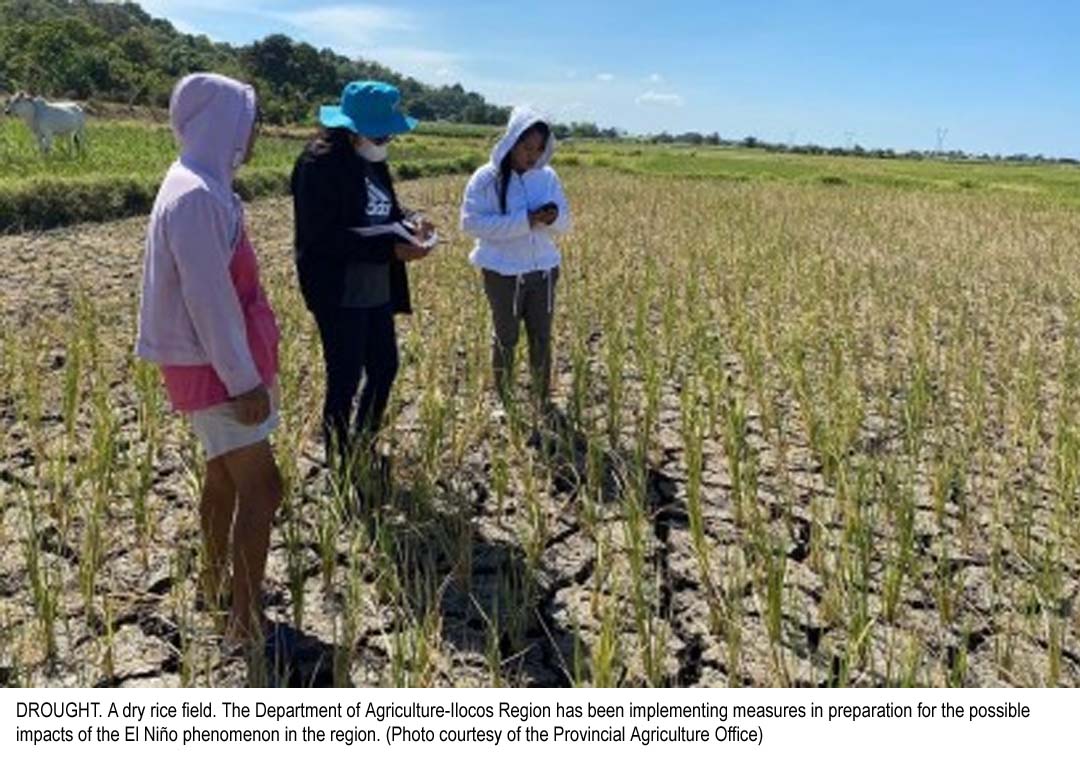
MALASIQUI, Pangasinan – The Department of Agriculture Regional Field Office 1 (DA-Ilocos Region) has intensified its preparedness and mitigation efforts to safeguard farmers and agricultural production from the potential impacts of the developing El Niño phenomenon.
During a recent forum, DA-FO1 Project Evaluation Officer Milagros Dela Cruz said the agency has activated a comprehensive monitoring and response system that includes crop validation, field monitoring, information dissemination, and coordination with local government units (LGUs) across the region.
“We continue to validate planting targets and closely monitor standing crops throughout the region. At the same time, we are strengthening public awareness through social media platforms, radio programs, meetings, and agricultural forums,” Dela Cruz said.
The agency has also activated its operations center to facilitate real-time monitoring and assessment of drought conditions while maintaining close coordination with provincial governments and municipal LGUs.
According to Dela Cruz, the DA regularly updates baseline agricultural data, including crop status, planting schedules, and harvesting activities, to support timely decision-making and intervention planning.
The agency is likewise working closely with the National Irrigation Administration (NIA), provincial governments, and local authorities in scheduling irrigation activities and identifying areas that are highly vulnerable to water shortages.
To strengthen water management capabilities, the DA continues the construction and rehabilitation of small-scale irrigation projects across the region. Additional support measures include the deployment of pump and engine sets, pesticides, and solar-powered irrigation systems to help farmers maintain crop productivity during prolonged dry conditions.
The department has also prepared emergency agricultural interventions for areas that may be affected by drought. These include the distribution of rice, corn, and assorted vegetable seeds to ensure continued food production and assist farmers in recovering from crop losses.
For the livestock sector, the DA has readied veterinary drugs and biologics to protect animals from diseases and pest outbreaks that may arise due to extreme weather conditions.
Ilocos Region remains one of the country’s major agricultural areas, with approximately 310,000 hectares devoted to rice production during the wet season and a total of 412,000 hectares cultivated during both wet and dry planting seasons.
Meanwhile, the Philippine Atmospheric, Geophysical and Astronomical Services Administration (PAGASA) reported that El Niño conditions are now present in the tropical Pacific Ocean. Climate models indicate an over 80 percent probability that the phenomenon will intensify into a full-fledged El Niño event and may persist until early 2027.
PAGASA warned that El Niño typically increases the likelihood of below-normal rainfall across many parts of the Philippines, heightening the risk of dry spells and drought, particularly in vulnerable agricultural communities. However, above-normal rainfall may still occur in some western sections of the country due to the influence of the southwest monsoon.
With proactive planning and coordinated interventions already underway, the DA aims to minimize the effects of El Niño and protect the livelihoods of farmers while ensuring stable food production throughout the region.
NPO News Team I Department of Agriculture Region I - PR