Philippine Reclamation Authority and Quezon City University Strengthen Partnership for Hydroponics Greenhouse Project, Advancing Climate-Smart Agriculture and Youth Empowerment

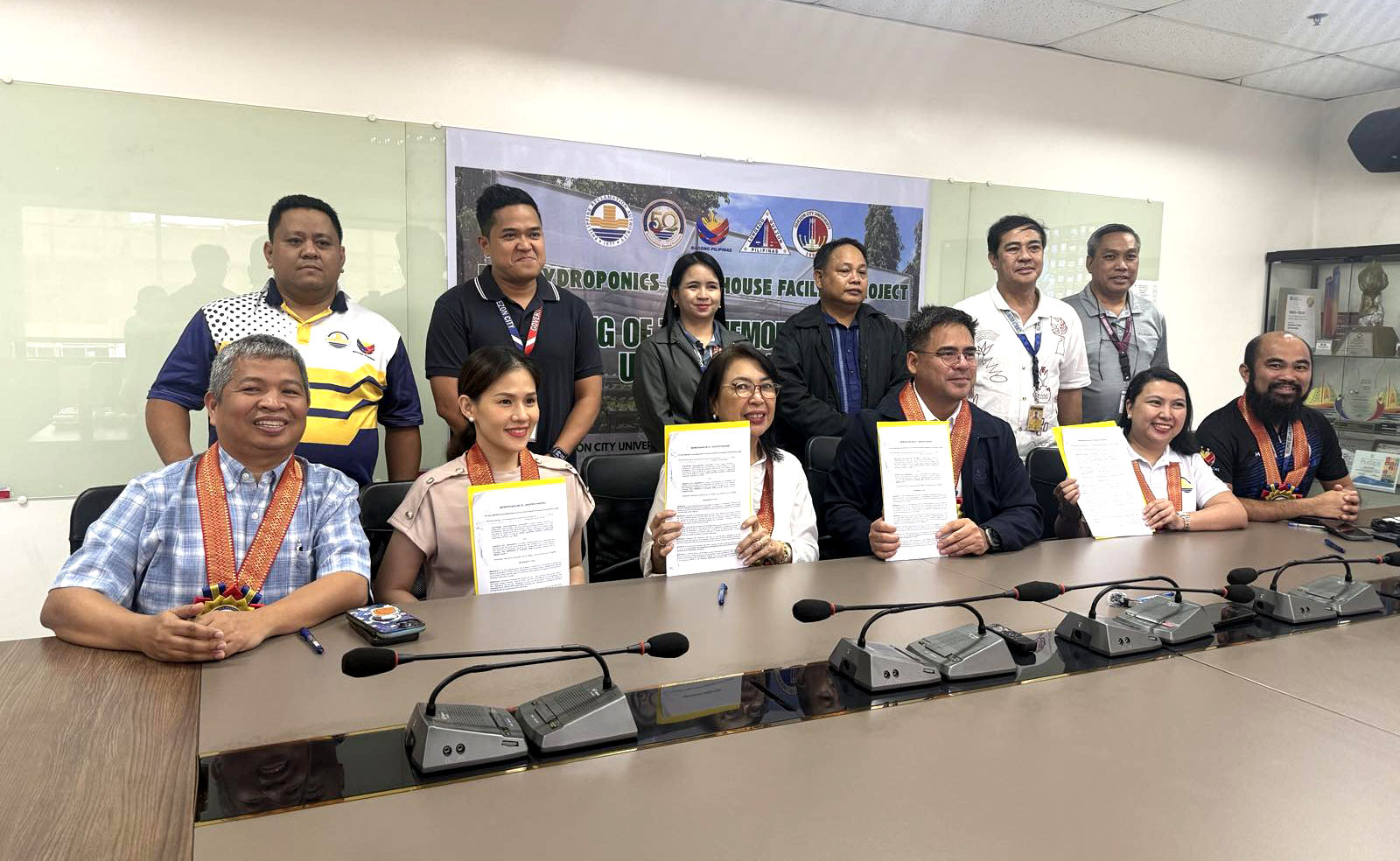
PRA and QCU mark a significant milestone through a Memorandum of Understanding signing, bringing together government officials, academic leaders, environmental advocates, and Biorganism Corporation to support sustainable food production, agricultural education, and digital farming innovation.
QUEZON CITY, PHILIPPINES — October 17, 2026 — In a
significant step toward advancing sustainable agriculture, environmental
education, and food security, the Philippine Reclamation Authority (PRA) and
Quezon City University (QCU) held a ceremonial signing of a Memorandum of
Understanding (MOU) on Friday, October 16, 2026, at the Quezon City University
Main Campus in Novaliches, Quezon City.
The event marked an important milestone in the
implementation of the PRA Hydroponics Greenhouse Facility Project, an
initiative designed to introduce modern agricultural technologies into educational
institutions, strengthen environmental awareness, and empower Filipino students
with practical knowledge of climate-resilient food production.
The ceremonial signing brought
together representatives from the Quezon City local government, PRA's Environmental
Management Department, QCU's academic and sustainability leadership, and
private-sector technology partners committed to promoting sustainable
development.
A Meaningful Partnership Between
Government, Academe, and Agricultural Technology Innovators
The signing ceremony highlighted the growing
importance of collaboration among government agencies, academic institutions,
and private enterprises in responding to the challenges of food security,
climate change, agricultural sustainability, and declining youth participation
in farming.
The program formally opened with registration and
preliminary activities, followed by welcome remarks delivered by Ms. Ynna
Margarita G. Yalong-Gelomina.
Engr. Mark John D. Pineda presented the PRA
Hydroponic Project, introducing its objectives and the significance of
incorporating hydroponic farming facilities into educational and
community-based sustainability programs.
The ceremonial signing took place symbolizing the
institutional commitment to advancing agricultural education and environmental
responsibility.
Following the signing, Engr. Anthony Peter D.
Crisologo, Member of the Board of Directors of the Philippine Reclamation
Authority, delivered a message of support, emphasizing the importance of
collaborative programs that contribute to community development and
environmental sustainability.
Dr. Theresa V. Atienza, DEM, President of Quezon
City University, likewise delivered a message of support, underscoring the university's
participation in educational initiatives that connect academic learning with
practical sustainability applications.
The ceremony concluded with a photo opportunity,
bringing together the participating institutions and stakeholders in
recognition of the partnership.
Among those who attended were representatives of Hon. Nicole “Nikki” V. Crisologo, Quezon City Councilor, officials and personnel of the PRA Environmental Management Department, QCU sustainability program heads and faculty members, and Henry V. Bayubay, President and Chief Executive Officer of Biorganism Corporation, a technology provider and distributor supporting the BC AGRI-System Climate-Smart Greenhouse and its integrated digital monitoring, agricultural marketing, Bagsakan trading, and delivery platform.
BC AGRI-System: Bringing
Climate-Smart Technology Into the Educational Environment
A notable private-sector participant in the event
was Biorganism Corporation, represented by its President and CEO, Henry V.
Bayubay, whose company supports the introduction and distribution of the BC
AGRI-System Climate-Smart Greenhouse Technology.
The integrated system is designed to extend
conventional hydroponic farming into a digitally monitored agricultural
ecosystem.
Through the BC AGRI-System, participating
institutions can potentially benefit from several interconnected technologies
and services:
- Climate-Smart
Greenhouse Technology: Controlled-environment agricultural facilities
supporting hydroponic crop production and efficient farm management.
- Digital
Environmental Monitoring: Sensor-enabled monitoring of greenhouse
temperature, water quality, pH levels, and nutrient conditions, depending
on the installed system configuration.
- Water
and Nutrient Management: Technologies supporting water efficiency,
nutrient management, and sustainable crop production.
- Geotagging
and Digital Documentation: Location-based identification, monitoring, and
documentation of participating greenhouse facilities.
- BC
AGRI-System Learning Program: Educational materials, tutorials, and
practical training modules designed to introduce students and teachers to
modern agriculture.
- Bagsakan
Digital Marketing and Trading Platform: A proposed digital connection
between agricultural producers, buyers, institutional markets, and community
consumers.
- Pickup
and Delivery System Portal: Digital logistics capabilities intended to
support the distribution and marketing of harvested agricultural products.
These technologies represent a broader vision in
which a greenhouse becomes more than a structure for growing vegetables. It
becomes a learning laboratory, a digital innovation platform, and a potential
foundation for sustainable community enterprise.
Biorganism Corporation's participation reflects the
importance of private-sector technological support in strengthening the
practical implementation of agricultural education and sustainability
initiatives.
Empowering Filipino Students to
Become the Next Generation of Digital Farmers
One of the most important objectives of the PRA
Hydroponics Greenhouse Facility Project is its potential to transform the way
Filipino students understand agriculture.
For generations, agriculture has been commonly
associated with traditional field cultivation, physically demanding farm labor,
and rural livelihoods. However, the emergence of hydroponics, automated
greenhouse management, environmental sensors, artificial intelligence, and
digital agricultural trading is reshaping the sector.
Through educational greenhouse facilities, students
can learn how food is produced, how plants respond to environmental conditions,
and how technology can improve agricultural productivity.
They may also gain exposure to emerging career
opportunities in agricultural engineering, information technology,
environmental science, biotechnology, agricultural entrepreneurship, and
digital farm management.
For Henry V. Bayubay and Biorganism Corporation,
the initiative is aligned with a broader advocacy to encourage young Filipinos
to recognize agriculture as a technology-driven industry capable of creating
innovation, employment, and entrepreneurial opportunities.
The program also offers a pathway for universities
and schools to integrate agricultural technology into research, community
extension services, and practical learning activities.
Supporting the Vision of “Tanim
Pangarap: Munting Tanim, Malaking Pangarap”
The partnership also complements the youth-centered
message of the PRA Hydroponics Greenhouse Facility Project's “Tanim Pangarap:
Munting Tanim, Malaking Pangarap” campaign.
The campaign promotes the idea that even a small
opportunity to plant, learn, and participate in agriculture can inspire a much
greater ambition among Filipino learners.
Its message, “Young Learners, Brighter Tomorrow,” emphasizes that education, opportunity, and practical skills development are essential foundations of national progress.
NPO News Team I BC-PR