?500-M Cold Storage Set to Transform Bicol’s Farm Economy

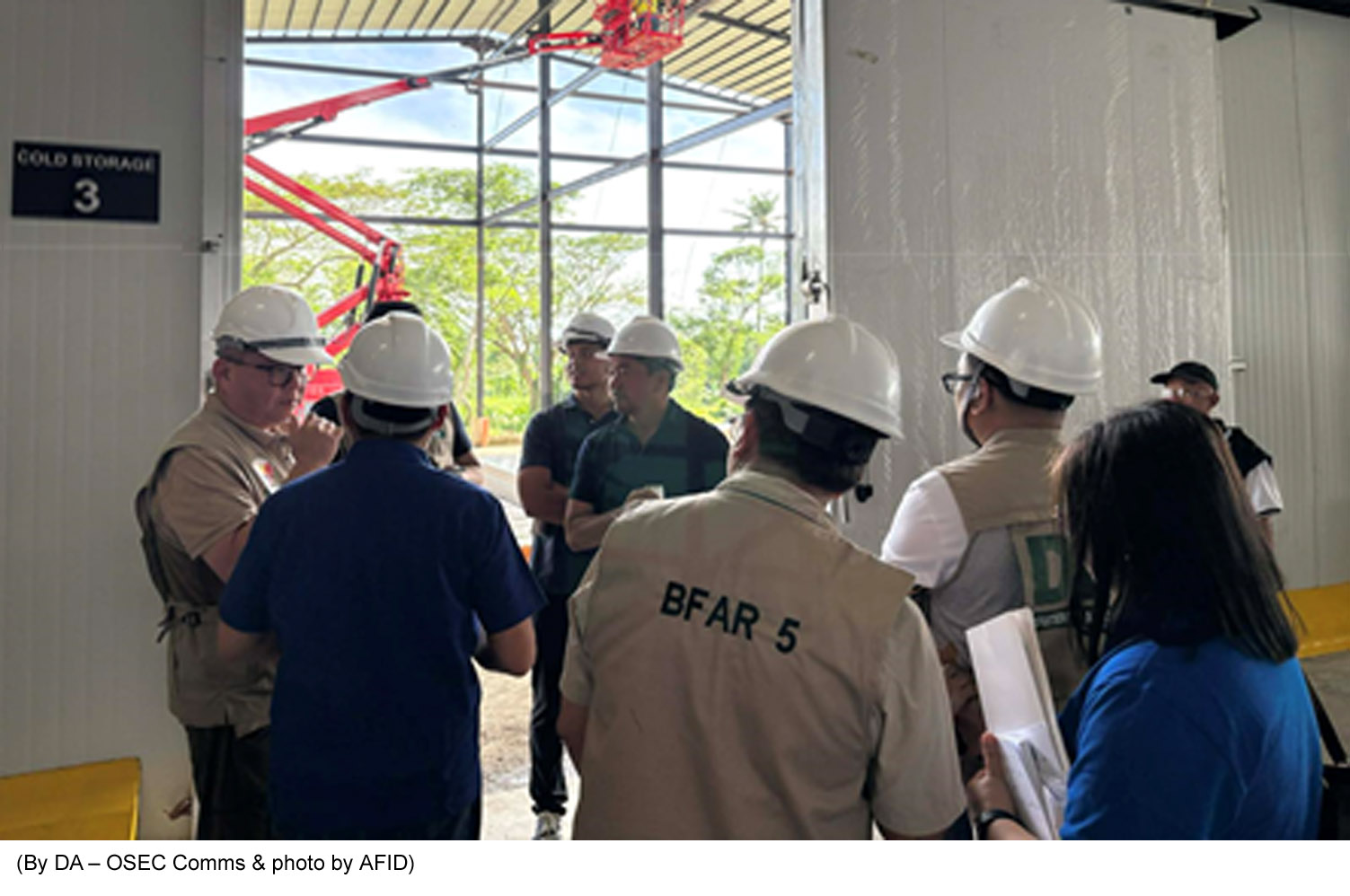
PILI, Camarines Sur (January 14, 2025) — A major investment poised to reshape agriculture in the Bicol region is nearing completion in Pili, as a ₱500-million mega cold storage facility moves closer to opening—offering farmers and fishers a long-missing tool to cut losses, stabilize prices, and unlock higher-value markets.
Agriculture Secretary Francisco P. Tiu Laurel Jr. and Camarines
Sur Governor Luis Raymund Villafuerte Jr.
inspected the project on Wednesday, ahead of its targeted launch in late
February or early March. Construction was slowed by successive typhoons and
adverse weather late last year, but officials said the project is now firmly
back on track.
“This is a game-changing investment,” Tiu
Laurel said. “It strengthens food security, generates jobs, attracts
agri-investments, and—most importantly—raises incomes for farmers, fishers, and
all players in the agriculture value chain in Bicol and nearby regions.”
Villafuerte credited President Ferdinand Marcos Jr. and the Department
of Agriculture for supporting what he described as the largest and most
advanced cold storage facility in the region. Once operational, he said, the
complex could ignite new entrepreneurial activity among local producers.
“Despite weather-related delays, we’re pushing hard to finish this as soon as
possible,” he added.
More than a storage site, the facility
underscores the Marcos administration’s push to modernize Philippine
agriculture by moving producers up the value chain. With access to cold
storage, farmers and fishers can store, process, and strategically time the
sale of perishable goods—reducing distress selling and improving bargaining
power.
The complex will feature six refrigerated warehouses
with a combined 2,688 pallet positions. At full capacity, it can hold around
4,600 metric tons of boxed meat or 3,000 metric tons of vegetables. It also
includes a blast freezer, processing and packing areas, and a solar power
system aimed at lowering energy costs and boosting operational efficiency.
“This won’t just serve Camarines Sur,”
Villafuerte said. “It’s designed to support the entire Bicol region, as well as
the Visayas and even Mindanao.” He noted that much of the produce from the
Visayas and Mindanao already passes through the province en route to Metro
Manila and other major Luzon markets—positioning Camarines Sur as a natural
logistics hub.
By cutting post-harvest losses and smoothing
supply flows, the facility is expected to help stabilize food prices while
protecting producers from sharp market swings. Officials said long-term success
will hinge on efficient management, affordable user fees, and strong links with
traders and institutional buyers to ensure high utilization.
Tiu Laurel also announced that the DA has
allocated another ₱500 million for a complementary food hub, with development
slated to begin in June and run for about a year. The hub will provide trading
and distribution facilities to complete the province’s emerging food system.
“With a complete food system in place, our
farmers and fisherfolk can reach higher-value markets—and even export,” Tiu
Laurel said. “That translates to more income, more jobs, and stronger food
security.”
In Pili, the rising steel and concrete now stand
as a tangible test of that vision—where longer shelf lives and better logistics
could finally deliver lasting gains for Bicolano agriculture.
— NPO News Team | DAPO-PR